Climate Risk and Resilience Toolkit 

For businesses, industries and cities, the built environment and infrastructure is where climate risk becomes economic reality.  

These curated insights help business and city leaders respond with confidence. They translate global expertise into practical guides for decarbonization, nature restoration and climate resilient action.

Energy efficient and decarbonized assets

Practical guides to accelerate the transition to low carbon futures by informing strategies and formulating policies across real-estate, construction, energy and other sectors.

Nature restoration 

Practical guides to accelerate the transition to nature positive cities and industries by informing strategies and formulating policies. 

CEO Briefing: Financing the Transition in Cities 

This briefing articulates the arguments for why financial institutions must take action on nature.

Nature Positive: Financing the Transition in Cities

An insight report making the financial case for nature solutions and provides guidelines for city and business leaders (2025).

Nature Positive: Guidelines for the Transition in Cities

An insight report for regenerating nature in cities with guiding frameworks and tools to support decisions (2024).

Nature Positive: Leaders' Insights for the Transition 

An insight report highlighting success stories of weaving nature into urban life and offers scalable solutions (2025).

Cities’ Efforts to Advance the Transition – Barranquilla 

Barranquilla, one of Colombia’s fastest-growing cities, is redefining urban development by investing over $380 million in green infrastructure, renewable energy and water management (2025).

Cities’ Efforts to Advance the Transition – San Francisco

San Francisco is leading the shift towards ecological resilience by embedding nature into city planning through partnerships, community engagement and standardized data systems (2025).

Cities’ Efforts to Advance the Transition – Durban

The City of Durban and the eThekwini Municipality are enhancing partnerships and initiatives, structures, and plans to halt and reverse nature loss by 2030, while maximizing its economic and social potential (2024).

Sector Transitions to Nature Positive 

These insights are also part of the Nature Positive Transitions series that informs sectoral approaches for business, guides the financing sector, and helps cities reconcile their relationship with nature, while aligning with the Global Biodiversity Framework. 

Climate adaptation and resilience

Practical guides to accelerate the transition to extreme weather risk adaptation and resilience across infrastructure, along with insights to catalyse public and private action across key resilience drivers for sustainable and inclusive growth. 

Business on the Edge: Building Industry Resilience to Climate Hazards

An insight report exploring climate hazards, showing how heat and flood threaten corporate fixed assets with potentially annual earnings losses of 6.6%–7.3% by 2035, and offers a roadmap for progress (2024). 

Resilient Economies: Strategies for Sinking Cities, Infrastructure and Flood Risks

An insight report highlighting the pathways for addressing compounding risks from land subsidence and extreme weather event to built infrastructure, economic and societal resilience (2025). 

Resilient Economies: Flood Adaptation Infrastructure Innovations - Japan

A briefing paper on infrastructure innovations across urban-rural areas of Japan, enabling immediate and long-term adaptation and building resilient to increasing flood risks (2026).

From Wildfire Risk to Resilience: The Investment Case for Action

A white paper presenting a framework for shifting towards prevention-focused, long-term wildfire resilience by making risk reduction measurable, priceable and financeable (2026).

Delivering Climate Resilient Cities Using a Systems Approach

An insight report providing cities with an actionable strategy to take a systems approach to climate resilience strategies. It provides a 5-step action plan to guide cities in adopting a systems approach to urban infrastructure delivery (2022). 

Resilient Firms and Economies: How to Help Unlock Growth in Emerging Markets

A white paper examining how coordinated actions can turn resilience challenges into sustainable growth, as only one in four companies feel prepared across resilience dimensions (2025).

Resilience Pulse Check: Harnessing Collaboration to Navigate a Volatile World

A white paper on how businesses are responding to today’s challenges, with insights from over 250 leaders across industries and regions (2025).

Building a Resilient Tomorrow: Concrete Actions for Global Leaders

A white paper showcasing pioneering initiatives from public and private organizations with concrete actions to promote resilience and identify opportunities for collaboration and investments (2024).

Other resources and case studies

Through it's activities the Davos Baukultur Alliance aims to identify and promote innovative practices and develop global policy principles and concrete tools to advance high-quality Baukultur.  Explore the toolkit below for supporting reports and case studies.

ICT products and services are the most scalable and used tool of our modern societies. Cities all over the world are using ICT to inform and serve citizens. At the same time this digital transformation is generating a massive amount of data that can be used to increase the efficiency of the city.As cities digitally transform, it is fundamental they ensure the accessibility of all products and services or risk widening the digital divide and excluding a significant percentage of the population. Disability – whether temporary, situational or permanent–is something that can affect people at any time. Designing with and for people with disabilities leads to greater innovations for everyone. ICT accessibility is not only important for persons with disabilities but also benefits the increasing elderly population, migrants that do not speak the native language and persons with low literacy.Procurement policies are a critical lever in increasing accessibility. They set out the expectation, standards and criteria for how goods and services will be purchased, and through this, the city can ensure the acquisition of universal designed products and services to safeguard the equitable development and participation of all. Model Policy – EnglishModel Policy – EspañolModel Policy – Japanese
Government, Technology
ICT Accessibility Model Policy
Digital infrastructure can be a complex policy area, and one that often attracts significant citizen and political attention. In this context, this model policy aims to provide cities with a comprehensive foundation to drive or accelerate digital infrastructure provision. Drawing on best practice from around the world, the model policy could be implemented as a policy in its entirety, used by the city as a guide to shape their wider approach to digital infrastructure, or as a resource to inform the development of internal and standard operating procedures. Some aspects of the model policy may also align with local, regional or national legislation.Intro to the Dig Once Model Policy VideoModel Policy – EnglishModel Policy – EspañolModel Policy – Japanese
Government, Technology
Dig Once Model Policy
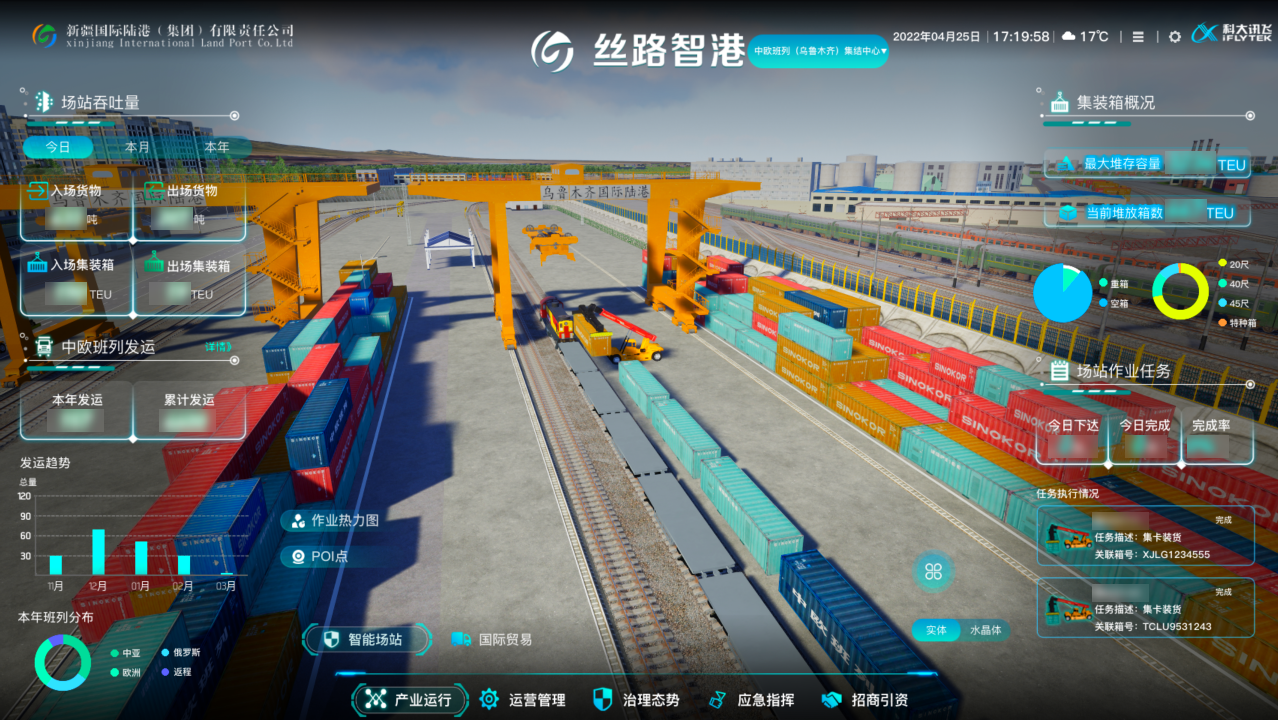
The IoT Port Platform of the China-Europe Railway (Urumqi) assemble center has built several middle platforms and scenario applications, including digital platform, intelligence platform, business platform, etc. Based on advanced technologies such as digital twins and artificial intelligence, the project integrates a variety of IoT devices to achieve the visibility, surveillance, and management of stations. Meanwhile, through introducing unmanned trucks and unmanned security patrol vehicles, it will be greatly helpful for stations to replace labor with robots, achieve unmanned station security and transportation operation, finally promote the development of station business work.
Supply Chain & Transportation
The IoT Port Platform of the China-Europe Railway (Urumqi) Assemble Center
The Video Cultural Industry Park of Malanshan is the first national-level radio and television industrial park,a national demonstration base for cultural and scientific integration, aiming to build as the "China V Valley" with global competitiveness. With industry as the core, relying on space-time big data and 5G as the feature, the park has built an industrial chain mapping and created digital twin applications such as intelligent operation management platform, smart studio, virtual digital man, digital cultural & tourism. At present, the park has built an intelligent hub system with IoT platform, CIM foundation platform, big data platform and AI platform as the core, which realizes resource sharing and business collaboration among different business modes, different applications and heterogeneous systems.
Technology, IT and Communications (ICT)
Digital Twin Make "China V-Valley" New Commercial
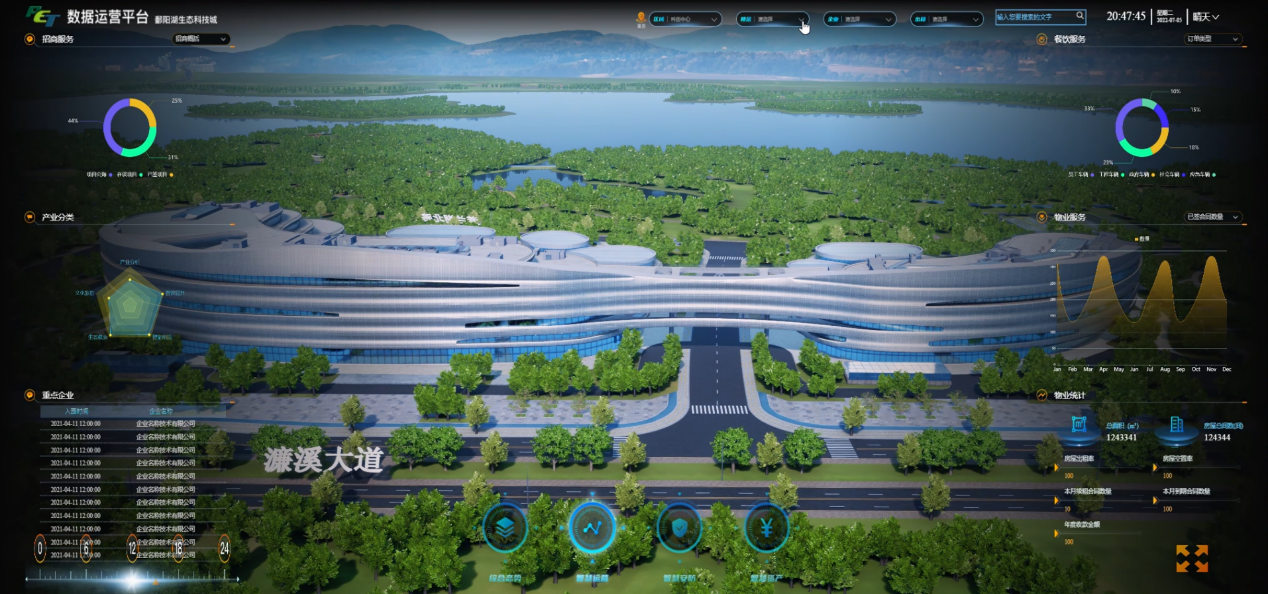
To comprehensively enhance the enterprise production management level, park operation level, and public service intelligence level, the Wise Park Project of ELHT makes full use of the leading advantages of the construction industry, industrial resource, park operation, and technology, and continues to develop basic park construction, intelligence operation mode, and artificial intelligence technology. The project builds three core platforms including digital platform, smart platform and business platform, which provide various intelligence services for park operation management, product development, etc. Based on the needs of enterprise development life cycle elements, these platforms will form "research chain, policy chain, and finance chain” as park’s digital operation service ecology, which will greatly promote the efficiency of enterprise development and the industrial economy.
Technology, IT and Communications (ICT)
WISE PARK PROJECT OF ELHT
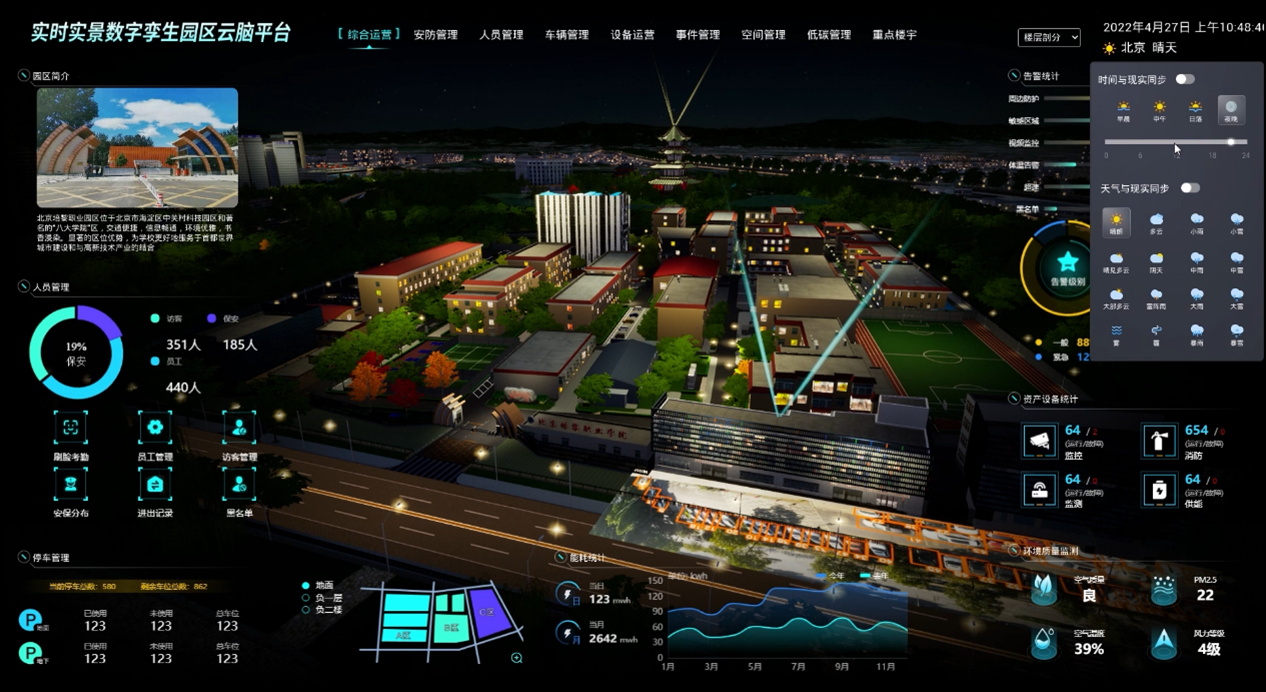
Dongsheng Peili Education Science and Technology Park Video Twin Pilot Park Demonstration Project, Realized a picture of Video oviparous, And connect the real-life video of 3D model of the whole campus. Combined with perception prediction, analysis and alarm and other related businesses (For example, comprehensive operation of security management personnel, manage vehicles, Event management, space management, low-carbon management, key buildings and BIM…), It brings authenticity and accuracy to the managers of the park. It is more convenient for managers to carry out daily control, emergency command and dispatch.
Education, Technology
Dongsheng Peili Education Science and Technology Park
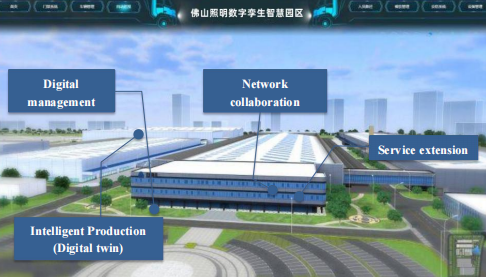
Through the construction of basic information platform, digital manufacturing information platform, intelligent manufacturing information platform, FSL Lighting endeavors to implement three major reforms as the industrial chain coordination, the whole value chain openning and the transparent operation , in order to comprehensively build and continuously improve the overall operation capacity of the group. At present, the informatization foundation has been established (SAP/SRM/PLM/intelligent warehouse, etc.), and MES and APS have also been tried in the headlight Division. The digital and intelligent transformation and upgrading has brought the industrial park not only "acceleration", but also the core competitiveness on the "new track".
Energy & utilities, Technology, IT and Communications (ICT)
A Future Digital Twin Factory for Smart Manufacturing
Build a smart park platform based on the AsiaInfo digital twin platform(AISWare Digital Gemini). By connecting with the existing subsystems, data fusion and system linkage can be realized, and the AsiaInfo digital twin platform can provide capabilities such as comprehensive situation, smart operation, smart assets, and smart security.Digital twin technology can realize the global visualization of park space information, fine insight into real-time situation, deep mining of park operation rules, and deduction and simulation of park development trends.
Engineering & Construction, Technology, IT and Communications (ICT)
5G Tech Park based on Digital Twins
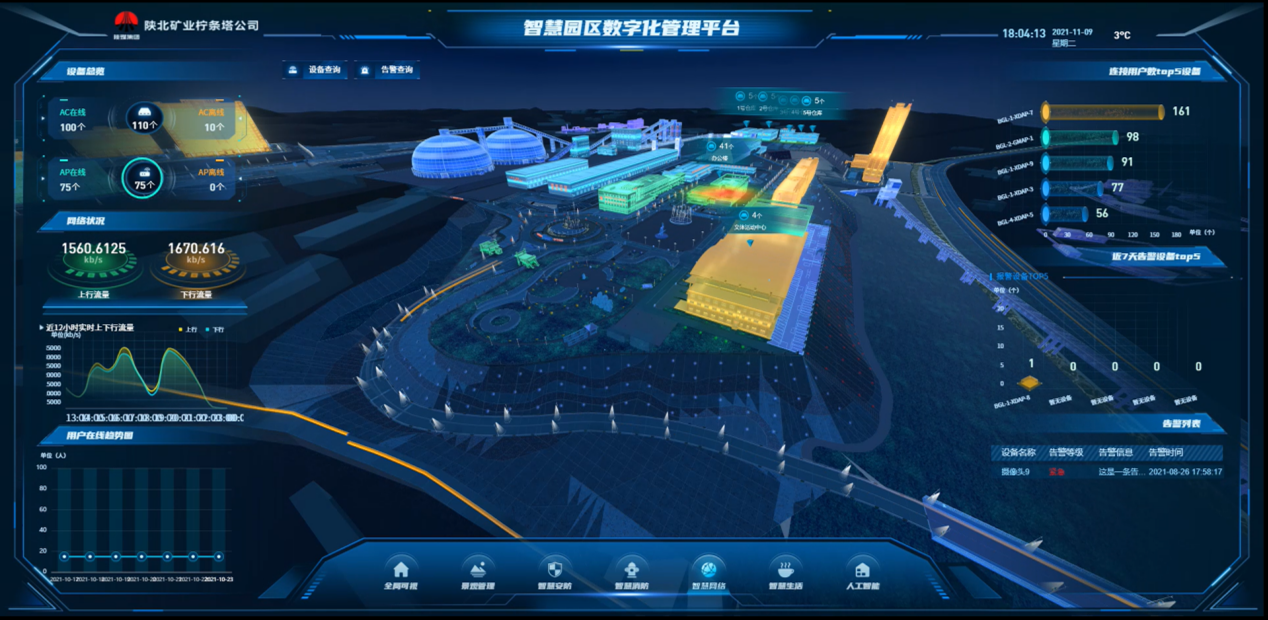
With the unique self-developed digital twin engine of UINOcompany, the Ningtiaota project carry out holographic digital modeling of Ningtiaota Park, combined with IOT, AI, knowledge map technologies, and with a new digital twin visual management of "what you see is what you get”, it realize the comprehensive management and control of the whole process, whole application and whole data, to create a safe, green and comfortable park environment for the employees of the park. 
Mining & Metals, Technology, IT and Communications (ICT)
Smart Park project of Shaanxi Coal Mine Group
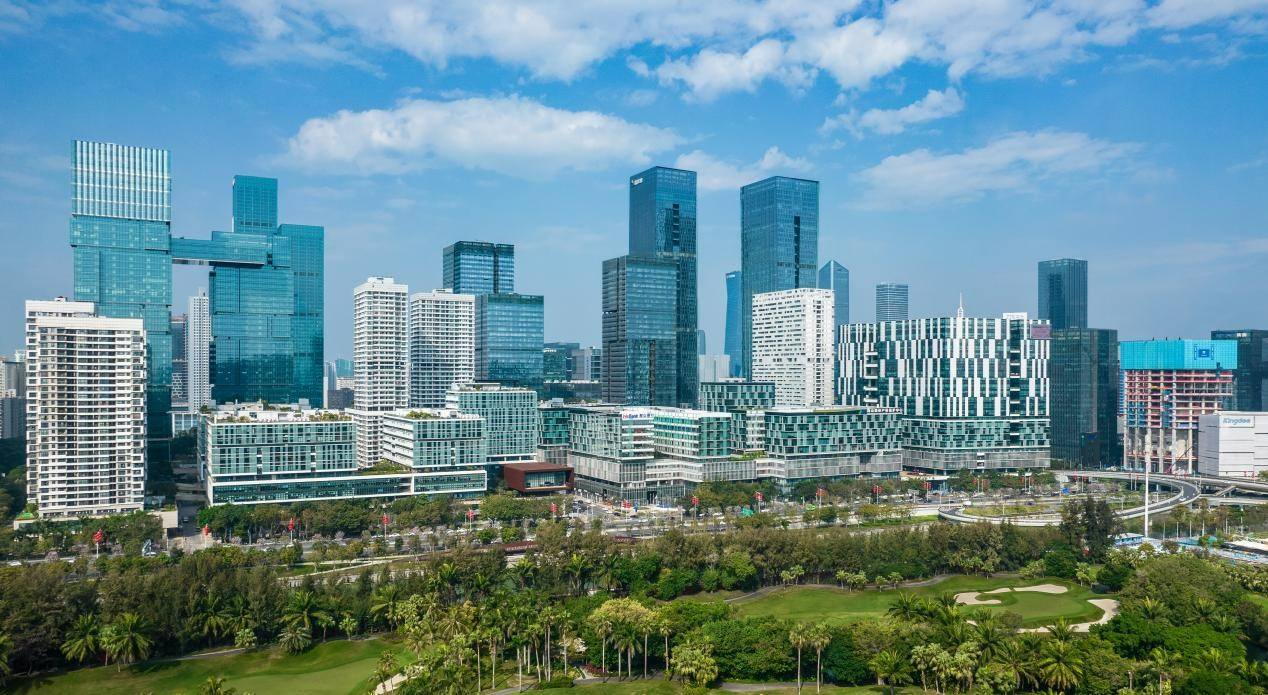
Located in Gaoxin south area of Nanshan District, Shenzhen Bay Eco-Tech Park covers an area of 203000 square meters and a construction area of 1888300 square meters,covering R & D,office,supporting apartments,commerce and hotels. The park has four areas and consists of 12 buildings. At present, it has gathered more than 800 high-tech enterprises, led by leading enterprises such as Huawei, Tencent, Airbus, Accenture, and supported by many high-quality small and medium-sized enterprises in the park.In addition,it has built industrial chains such as artificial intelligence, Kunpeng computing, science and technology finance, and new generation information technology. It is a typical representative Park of "Zhongguancun in the north and Shenzhen Bay in the South".
Engineering & Construction, Technology, IT and Communications (ICT)
Shenzhen Bay Eco-Tech Park
The Cambridge Centre for Advanced Research and Education in Singapore (CARES) is a platform for collaboration between the University of Cambridge and Singaporean research institutes. The largest project at CARES is the Cambridge Centre for Carbon Reduction in Chemical Technology (C4T), which develops technologies and techniques to reduce the carbon footprint of chemical industries. One breakthrough in this area is an approach developed by CARES to create an architecture for a universal digital twin – something that can describe the state and behaviour of any interconnected system.The World Avatar (TWA) project aims to create a digital avatar of the real world. TWA represents the digital world using a dynamic knowledge graph containing concepts and data describing the world. TWA simulates the world’s behaviour with an ecosystem of autonomous computational agents that update the concepts and data so that the digital world remains current in time. In this manner, it is possible to create digital twins that can describe the behaviour of any complex system and can make data-driven decisions about how to optimise the systems.
Education, Technology, IT and Communications (ICT)
Cambridge CARES and the World Avatar Project
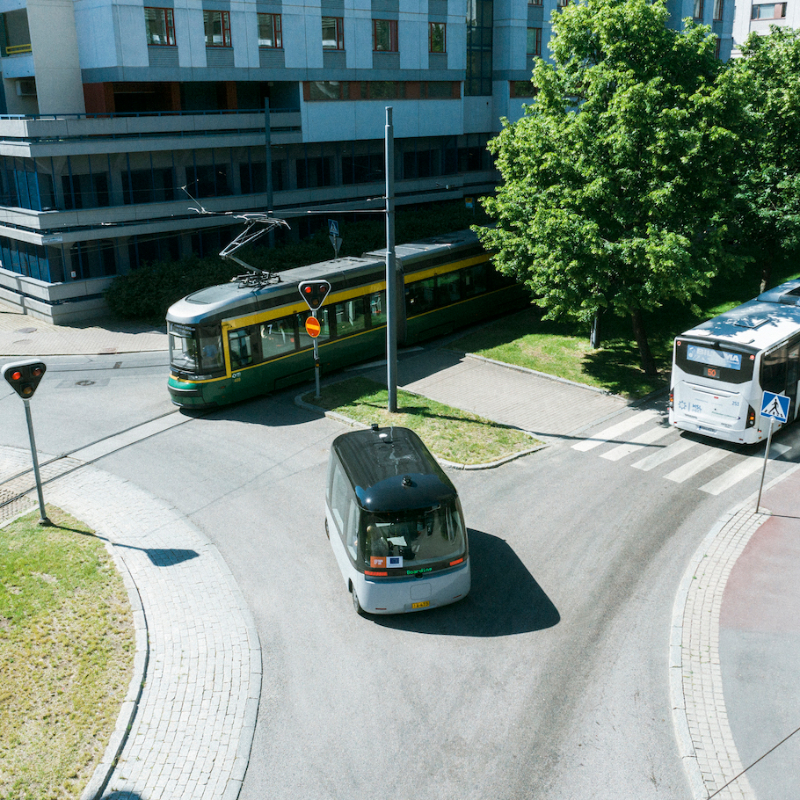
The FABULOS (Future Automated Bus Urban Level Operation Systems) project was designed to accelerate innovation in the development of autonomous bus systems and prepare cities for the future of mobility, with the goal to implement and operate an autonomous electric bus line using a pre-commercial procurement approach. Different holistic automated fleet management solutions have been piloted in five partner cities, with the collaboration of public and private entities sharing the benefits and risks of the project.The project applies a systems approach in order to find a holistic solution that includes not just a fleet of autonomous electric buses, but also the overall fleet management capabilities, maintenance and charging, and control room functions with full integration into existing public transport.
Finland, Greece, Netherlands, Estonia, Norway | Transportation, Government, Mobility, Technology
FABULOS Pre-Commercial Procurement
Forum Virium Helsinki
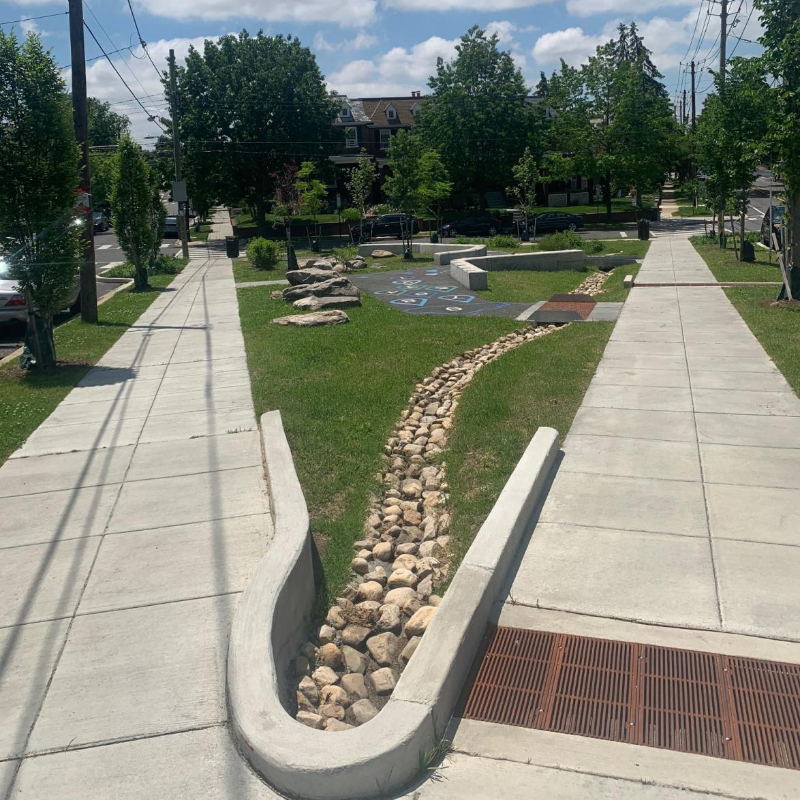
The District of Columbia, like many US cities, has a combined stormwater and sanitary sewage system, which often experiences frequent sewage overflows. Washington’s combined sewer overflows were dumping an average of 2.5 billion gallons of combined sewer water annually into three rivers, including the Rock Creek tributary that ultimately flows into the Chesapeake Bay. These polluted water overflows brought bacteria, trash and heavy metals along with them, negatively impacting DC’s water quality, air quality and natural habitats. The combined overflows reached volumes and frequency that violated the US Clean Water Act.
USA | Government
DC Water - Environmental Impact Bond
Quantified Ventures
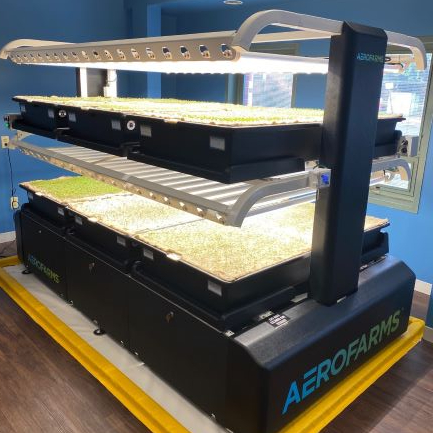
Healthy Greens JC is a joint initiative between the Jersey City Department of Health and Human Services (HHS), Jersey City Housing Authority (JCHA) and AeroFarms to deliver healthy, local-sourced vertically farmed produce in efforts to tackle food insecurity by merging technology, education and food access. The initiative has resulted in two operational vertical farms, with eight more in development. The goal is to bring healthier food options to low-income communities and to increase education on nutrition and healthy eating. Healthy Greens JC is the first comprehensive urban vertical farm programme in the United States.
USA | Food & agriculture, Health, Government, Technology
Healthy Greens - Jersey City
AeroFarms, Department of Health and Human Services, City of Jersey City, Oura, City of Jersey City
This report makes a case for the need for systematic digitalization in cities, the need to pursue an outcomes-based planning, design and implementation of digitalization projects, the strategic role of data, the leadership and governance required and how to build a digitally enabled city. The report provides a digital maturity model and a 10-step action plan. These tools are intended to help city administrations identify their status quo with respect to digital capabilities, and derive promising measures for cities to develop the structures and capabilities required to utilize digital technologies for a green and just recovery.
Using Digital Technology for a Green and Just Recovery in Cities
This report provides cities with an actionable strategy to enable cities take a systems approach to climate resilience strategies. A systems approach leverages linkages across multiple infrastructure sectors, enhances integrated governance and finance, and deepens engagement among diverse stakeholders, thereby maximizing the co-benefits of climate actions. The report provides a 5-step action plan to guide cities in adopting a systems approach to urban infrastructure delivery.
Delivering Climate Resilient Cities Using a Systems Approach
This paper explains how the G20 Global Smart Cities Alliance is developed Regional Alliances around the world; how it supports the partners and the Centre for the Fourth Industrial Revolution Network to build regional networks that support cities; and how through a new playbook, it intends to scale this model further, creating new networks that can promote initiatives for emerging technologies.
Building Regional Alliance for Urban Transformation
This paper explains how the G20 Global Smart Cities Alliance is developing Regional Alliances around the world; how it supports the partners and the Centre for the Fourth Industrial Revolution Network to build regional networks that support cities; and how through a new playbook, it intends to scale this model further, creating new networks that can promote initiatives for emerging technologies.
Government, Technology
Building Regional Alliances for Urban Transformation
This Playbook can be used as a guide to the necessary steps for establishing a Regional Alliance in a country or region.The purpose of this Playbook is to share information on success points and tasks to be performed for Regional Alliance establishment based on the experience of existing regional networks in the G20 Global Smart Cities Alliance, notably the Japan City Community.
Government, Technology
Regional Alliance Playbook
Matteo Massenzio and Marco Lombardo from the Municipality of Milan talk through a learning sessions on:The history of open data in MilanMilan's open data portalPolicies and proceduresOpen data projects
Italy | Government, Technology
The Storytelling of Milan Through its Data
Comune di Milano