Climate Risk and Resilience Toolkit 

For businesses, industries and cities, the built environment and infrastructure is where climate risk becomes economic reality.  

These curated insights help business and city leaders respond with confidence. They translate global expertise into practical guides for decarbonization, nature restoration and climate resilient action.

Energy efficient and decarbonized assets

Practical guides to accelerate the transition to low carbon futures by informing strategies and formulating policies across real-estate, construction, energy and other sectors.

Nature restoration 

Practical guides to accelerate the transition to nature positive cities and industries by informing strategies and formulating policies. 

CEO Briefing: Financing the Transition in Cities 

This briefing articulates the arguments for why financial institutions must take action on nature.

Nature Positive: Financing the Transition in Cities

An insight report making the financial case for nature solutions and provides guidelines for city and business leaders (2025).

Nature Positive: Guidelines for the Transition in Cities

An insight report for regenerating nature in cities with guiding frameworks and tools to support decisions (2024).

Nature Positive: Leaders' Insights for the Transition 

An insight report highlighting success stories of weaving nature into urban life and offers scalable solutions (2025).

Cities’ Efforts to Advance the Transition – Barranquilla 

Barranquilla, one of Colombia’s fastest-growing cities, is redefining urban development by investing over $380 million in green infrastructure, renewable energy and water management (2025).

Cities’ Efforts to Advance the Transition – San Francisco

San Francisco is leading the shift towards ecological resilience by embedding nature into city planning through partnerships, community engagement and standardized data systems (2025).

Cities’ Efforts to Advance the Transition – Durban

The City of Durban and the eThekwini Municipality are enhancing partnerships and initiatives, structures, and plans to halt and reverse nature loss by 2030, while maximizing its economic and social potential (2024).

Sector Transitions to Nature Positive 

These insights are also part of the Nature Positive Transitions series that informs sectoral approaches for business, guides the financing sector, and helps cities reconcile their relationship with nature, while aligning with the Global Biodiversity Framework. 

Climate adaptation and resilience

Practical guides to accelerate the transition to extreme weather risk adaptation and resilience across infrastructure, along with insights to catalyse public and private action across key resilience drivers for sustainable and inclusive growth. 

Business on the Edge: Building Industry Resilience to Climate Hazards

An insight report exploring climate hazards, showing how heat and flood threaten corporate fixed assets with potentially annual earnings losses of 6.6%–7.3% by 2035, and offers a roadmap for progress (2024). 

Resilient Economies: Strategies for Sinking Cities, Infrastructure and Flood Risks

An insight report highlighting the pathways for addressing compounding risks from land subsidence and extreme weather event to built infrastructure, economic and societal resilience (2025). 

Resilient Economies: Flood Adaptation Infrastructure Innovations - Japan

A briefing paper on infrastructure innovations across urban-rural areas of Japan, enabling immediate and long-term adaptation and building resilient to increasing flood risks (2026).

From Wildfire Risk to Resilience: The Investment Case for Action

A white paper presenting a framework for shifting towards prevention-focused, long-term wildfire resilience by making risk reduction measurable, priceable and financeable (2026).

Delivering Climate Resilient Cities Using a Systems Approach

An insight report providing cities with an actionable strategy to take a systems approach to climate resilience strategies. It provides a 5-step action plan to guide cities in adopting a systems approach to urban infrastructure delivery (2022). 

Resilient Firms and Economies: How to Help Unlock Growth in Emerging Markets

A white paper examining how coordinated actions can turn resilience challenges into sustainable growth, as only one in four companies feel prepared across resilience dimensions (2025).

Resilience Pulse Check: Harnessing Collaboration to Navigate a Volatile World

A white paper on how businesses are responding to today’s challenges, with insights from over 250 leaders across industries and regions (2025).

Building a Resilient Tomorrow: Concrete Actions for Global Leaders

A white paper showcasing pioneering initiatives from public and private organizations with concrete actions to promote resilience and identify opportunities for collaboration and investments (2024).

Other resources and case studies

Through it's activities the Davos Baukultur Alliance aims to identify and promote innovative practices and develop global policy principles and concrete tools to advance high-quality Baukultur.  Explore the toolkit below for supporting reports and case studies.

The purpose of this model policy roadmap is to set out how city leaders working on planning and building infrastructure projects can adopt a whole-of-life-cycle approach – from planning to management to repurposing.
Implementating a Lifecycle Approach to Infrastructure: A Policy Roadmap for Cities
A collection of projects, programmes and initiatives which that have endeavoured to respond to changes and challenges to achieve high quality in designed living environments.
Engineering & Construction
Davos Baukultur Alliance Innovative Practice
This policy document can be used by procurers and purchasers in public bodies to guide their approach to innovation-friendly procurement. The aim is to unlock the potential of procurement to bring about innovation and a whole range of potential economic, social and environmental impacts. It lays out a set of principles along with practical examples that can direct the user.These guidelines were developed by the Taskforce on Innovation Procurement led by the World Economic Forum’s G20 Global Smart Cities Alliance in collaboration with the Connected Places Catapult.
Government, Technology
Innovation-Friendly Procurement Model Policy
This report is the first of a series of publications that make the case for regenerating nature in cities. Through guiding frameworks and practical tools, it is designed to help local decision-makers develop and implement comprehensive strategies that rethink urban planning, regulations, incentives, economic value, cost-benefit analyses and public–private collaborations for the benefit of nature and society. 
Government, Engineering & Construction, Nature & Natural capital
Nature Positive: Guidelines for the Transition in Cities
This report is part of the World Economic Forum’s Nature Positive Transitions report series developed in collaboration with Oliver Wyman, which seeks to illuminate the ongoing efforts that sectors and cities around the globe are making to contribute to the Global Biodiversity Framework and foster a nature-positive future.
Nature Positive Cities Efforts to Advance the Transition - Durban
As cities grow in population and importance, urban construction will continue to gather pace. It is estimated that global floor area is expected to double by 2060, the equivalent of adding New York City every month for the next 40 years. This white paper highlights case studies and nine innovative solutions that provide models for cities seeking to meet sustainable development goals.
Engineering & Construction, Nature & Natural capital
Reducing Embodied Carbon in Cities: Nine Solutions for Greener Buildings and Communities
This playbook supports the adoption of the G20 Global Smart Cities Alliance’s Whole Life Carbon Assessment (WLCA) model policy by identifying the contextual nuances and providing guidance to overcome challenges and implement the policy.
Adoption Playbook for Whole Life Carbon Assessment Mandates
The urban affordability crisis is widespread and multifaceted, highlighting systemic injustice and deepening inequities for the 56% of the global population that calls cities home today. 
Reshaping affordability: interventions for inclusive and livable cities
Geneva and San Francisco: A tale of 2 cities and their innovation journey
How Cities Adapt and Evolve
This guide explains how to prepare a whole life carbon assessment (WLCA) in alignment with the model policy created by the Taskforce on Sustainability and Smart Cities. It is framed to be used by practitioners who must comply with the policy.The guide explains what goes into submitting and complying with a WLCA. To stay impartial, the guide does not go into any one specific WLCA framework, but highlights what is needed to create a successful assessment.
Practitioners’ Guide to Whole Life Carbon Assessments
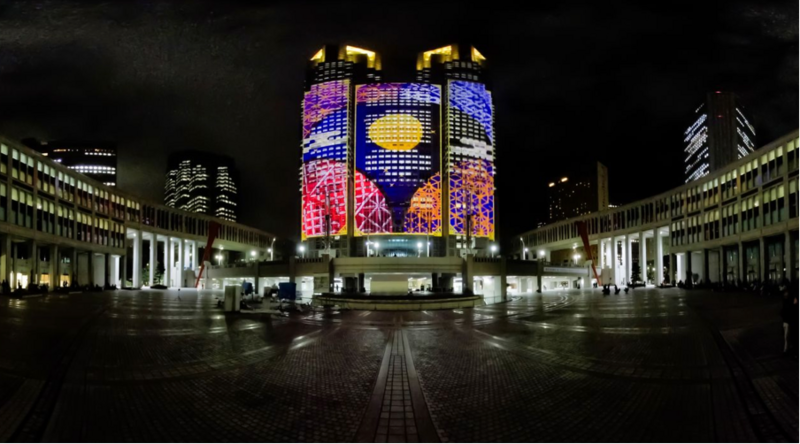
Tokyo’s nighttime environment has been enhanced through large-scale projection mapping and vibrant lighting displays designed to boost nighttime tourism and enliven public spaces after dark. Key initiatives include the Tokyo Night & Light projection on the Tokyo Metropolitan Government Office building—the largest of its kind globally—and seasonal illuminations along Roppongi Hills, Marunouchi’s Nakadōri, and Shibuya’s Blue Grotto. Iconic landmarks such as Tokyo Tower and Tokyo Skytree feature dynamic, culturally significant lighting schemes year-round, combining aesthetics with efforts to minimize light pollution. Despite a pandemic-induced decline in overall nighttime brightness and fewer neon signs, these lighting innovations help transform Tokyo’s nightscape, making it a memorable destination for residents and visitors alike. The use of advanced lighting technology not only brightens the city but also supports the nighttime economy by attracting crowds and encouraging after-dark activity
Japan
Illuminating Tokyo: Enhancing Nightlife and Cultural Experience through Projection Mapping and Lighting Displays
Data After Dark is a platform to support a vibrant, safe, and diverse Sydney nightlife. It aims to provide local and state government with a thorough, consistent and shared understanding of Sydney's 24-hour economy to further enhance Sydney’s standing as a global nightlife destination.
Australia
Data After Dark
NSW Office of the 24-Hour Commissioner
Camden Night StrategyType of a Document A: StrategyLocal Authority: CamdenCommissioned by: Camden
United Kingdom
Camden Night Strategy
Dublin City Council established a “Telecoms Unit” in April 2022 to centralize and consolidate functions relevant to telecommunications and digital infrastructure into a dedicated unit within the City Council. The unit is a one-stop-shop for all telecoms related activities, providing a single point of contact for citizens, industry and other public bodies to engage with. It is responsible for developing and executing Dublin City Council’s telecoms strategy and supporting the rollout of digital infrastructure. 
Ireland | Government, Technology, IT and Communications (ICT)
Dublin Telecoms Unit Case Study
Although the concept of “smart cities” has existed for nearly two decades, many cities that aspire to be smart still lack the basic governance and policies needed to ensure that technology is adopted in a responsible and ethical way. This is even the case for members of the G20 Global Smart Cities Alliance that are seen as pioneers of the process. 
Government, Technology
Governing Smart Cities: Use Cases for Urban Transformation
Cities can facilitate network deployment by making their assets and land available to network providers – and foster true public-private partnerships. Both cities and network providers can benefit from the use of local authority assets in this way. Simplifying the interactions between cities and the telecommunications industry promises to significantly accelerate the expansion of existing wireless networks and connectivity and, by extension, support local economic growth and digital inclusion in cities across the world.This is a wide-ranging policy, reflecting the importance and scale of improving urban digital infrastructure – and the multiplier effect that positive urbanization has on a number of other areas, including rural-urban linkages. It includes asset and portfolio management, budgetary aspects and shaping collaborative public-private partnerships. However, the policy reaffirms the strong position of cities: with assets and infrastructure made available to drive meaningful improvements in connectivity. Depending on local context, some cities may be able to explore all aspects of the policy in their entirety – while others may require collaboration with the national government or other stakeholders.
Technology, IT and Communications (ICT)
Public Sector Asset Use Model Policy
The objective of this model policy is to help cities draft legislation requiring WLC assessments for major developments in the built environment. While there  are a variety of interpretations of the term “major development” and as much variety in the criteria to define them, major development is defined here as any work that requires planning approval. This includes retrofits, renovation, refurbishment and new construction.Cities adopting this policy model would take a decisive step to reduce the carbon footprint of their built environment and reach their climate-neutrality and net-zero emissions targets. By adopting this policy, cities would also meet some of the leadership commitments of the C40 Cities Accelerators: Net Zero Buildings Accelerator and Clean Construction Accelerator.
Engineering & Construction, Materials
Whole Life Carbon Assessment Mandates Model Policy
Destination Medical Center (DMC) is a 20-year economic development initiative that aims to transform the City of Rochester in the US State of Minnesota into a global destination for healthcare, innovation and research. It is the largest public-private collaboration in the state of Minnesota. By aligning public and private interests for urban revitalization – and engaging the community through an award-winning codesign approach – the initiative has resulted in thousands of new jobs created, more than $1.5 billion of new private investment and the creation of dozens of life science start-ups. Future projects will focus on supporting existing local businesses, creatively reusing excess real estate and diversifying the economy
USA | Health, Government
Destination Medical Center
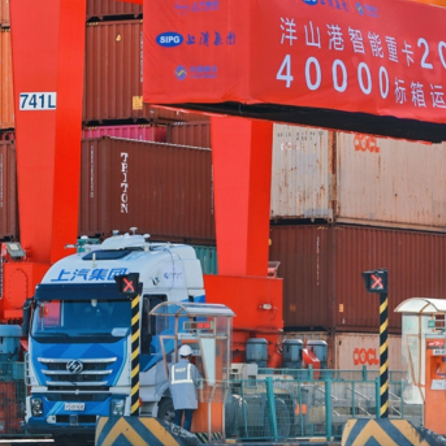
Private sector stakeholders SAIC Motor, Shanghai International Port Group (SIPG), China Mobile and the Shanghai Intelligent Connected Vehicle Innovation Center (SICVIC) have partnered with the Shanghai government to develop and implement selfdriving intelligent heavy trucks (IHDTs) for the transportation of shipping containers from Yangshan Deepwater Port, which is the largest container port globally, to the Lingang logistics park over the Donghai Bridge. This project, which represents the world’s first 5G+L4 IHDT mass commercialized operation, aims to resolve bottlenecks at Yangshan Port, enhance port and traffic efficiency, environmental and safety outcomes. The case highlights the importance of developing a sustainable business model, pursuing technological and policy innovation, and maintaining close partnerships and ongoing communication.  
People's Republic of China | Supply Chain & Transportation
Yangshan Port Intelligent Heavy Duty Truck
Project Greenlight, an initiative of the Vancouver Economic Commission in Vancouver, British Columbia, Canada, is a technology demonstration platform that connects enterprises and innovators with the goal of fast-tracking pilot projects and accelerating innovation focused on smart and sustainable solutions. Project Greenlight, a fee-based membership initiative, enables innovators with an opportunity to propose their new technologies to major enterprises seeking solutions to urban challenges, such as stormwater management and equitable transit solutions. The public-private collaboration provides cities and asset owners, such as transit and utility companies, with access to emerging but tested and scalable solutions that would otherwise be overlooked due to traditional procurement processes that favour large companies.  
Canada | Government
Project Greenlight